 Livraison standard à partir de 6,99 €


Last Updated: November 19, 2026
Quick Summary
A rotary tattoo machine for realism detail beats a coil because its motor-driven output stays consistent, while coil springs fatigue and drift over time. Choose a short stroke of 2.2mm to 3.2mm for soft shading and micro-detail, and look for a brushless motor with direct drive.
- Coil machines lose repeatability as springs fatigue and contact points wear across their service life.
- A 2.2mm to 2.7mm stroke suits soft black-and-grey shading and micro-detail work.
- The Legend Air adjustable stroke pen offers six stroke options from 2.2mm to 3.2mm at 125g.
- Build gradients with a wider round shader or magnum, then finish detail with a tight 1RL to 3RL.
- Check the cartridge connection for play before the first line to prevent mid-session wobble.
Table of Contents
- What Actually Decides Realism Detail in a Tattoo Machine
- Rotary vs Coil Tattoo Machine for Realism: The Honest Trade-Off
- Tattoo Machine Stroke Length for Shading and Soft Gradients
- Choosing a Tattoo Pen for Fine-Line Realism and Portrait Work
- Side-by-Side: Legend Machines Compared for Realism Detail
- Needle Grouping, Cartridge Fit and Healed Results
- Tattoo Machine Maintenance for Consistent Performance
- Pick Your Realism Machine and Add It to Cart
- Frequently Asked Questions
What Actually Decides Realism Detail in a Tattoo Machine
Realism lives or dies on one thing: how precisely the needle repeats the same microscopic movement, thousands of times, without drift. A tattoo machine for realism detail is not chosen by brand loyalty or by how many strokes it lists on the box. It is chosen by how well its stroke, motor control and consistency hold up over a four-hour session.
At CAM Supply Gmbh, the question realism specialists ask most often is why one machine produces smooth gradients while another chews the skin at the same voltage. The answer sits in three specifications.
Stroke Length, Precision and Consistency
Stroke length is the distance the needle travels between its highest and lowest point, measured in millimetres. It sets the ceiling on what a machine can do well. A short stroke gives you control and softness. A long stroke gives you coverage and line saturation. Precision is a separate question, and it depends on the motor and drive system holding the same output punch after punch.
Consistency matters more than raw power in realism. A machine that hits harder on the first pass than the fifth will leave you fighting patchy saturation. Look for a direct drive system and a brushless motor, both of which hold torque more evenly than entry-level gearboxes.
Rotary vs Coil Tattoo Machine for Realism: The Honest Trade-Off
Rotary machines are generally the better fit for realism detail. Coil machines still earn their place for bold traditional linework, but the trade-off is real and worth understanding.
Coils hit with a spring-loaded, reciprocating action. The give in the armature bar is forgiving on skin, which is why traditional artists love them. The problem is repeatability. Springs fatigue, contact points wear, and the machine's feel changes across its service life.
Rotary machines drive the needle with a motor, so output is set by voltage and stays there. A direct drive rotary delivers a smooth, linear punch that suits soft shading and micro-detail.
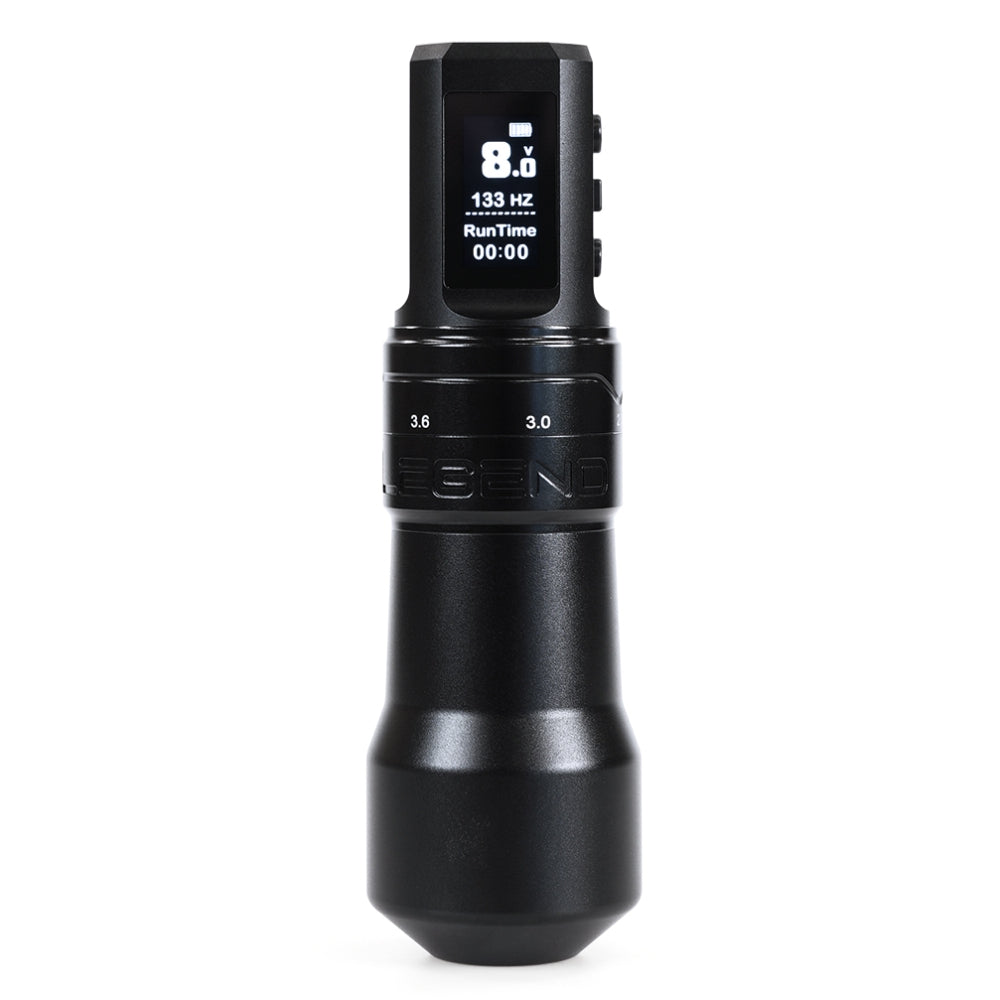
If you are weighing rotary options for realism, the Legend Limitless PRO adjustable stroke pen covers a 2.3mm to 4.3mm stroke range in a single wireless machine, so you can test both ends of that trade-off without buying twice.
Tattoo Machine Stroke Length for Shading and Soft Gradients
For soft shading and smooth gradients, you want a short stroke, generally in the 2.2mm to 3.2mm range. A shorter throw means a gentler hit, and a gentler hit lets you layer ink gradually instead of dumping it in one pass.
Here is how the stroke bands map to realism techniques:
| Stroke Range | Best Technique | Why It Works |
|---|---|---|
| 2.2mm - 2.7mm | Soft black-and-grey shading, micro-detail | Gentle hit allows layered, smoother blends |
| 3.0mm - 3.2mm | Pepper shading, fine linework, portrait gradients | Balance of control and pigment delivery |
| 3.5mm - 3.9mm | All-around work, blending into colour realism | Efficient without losing control |
| 4.3mm+ | Bold lining, traditional saturation | Longer throw packs pigment fast |
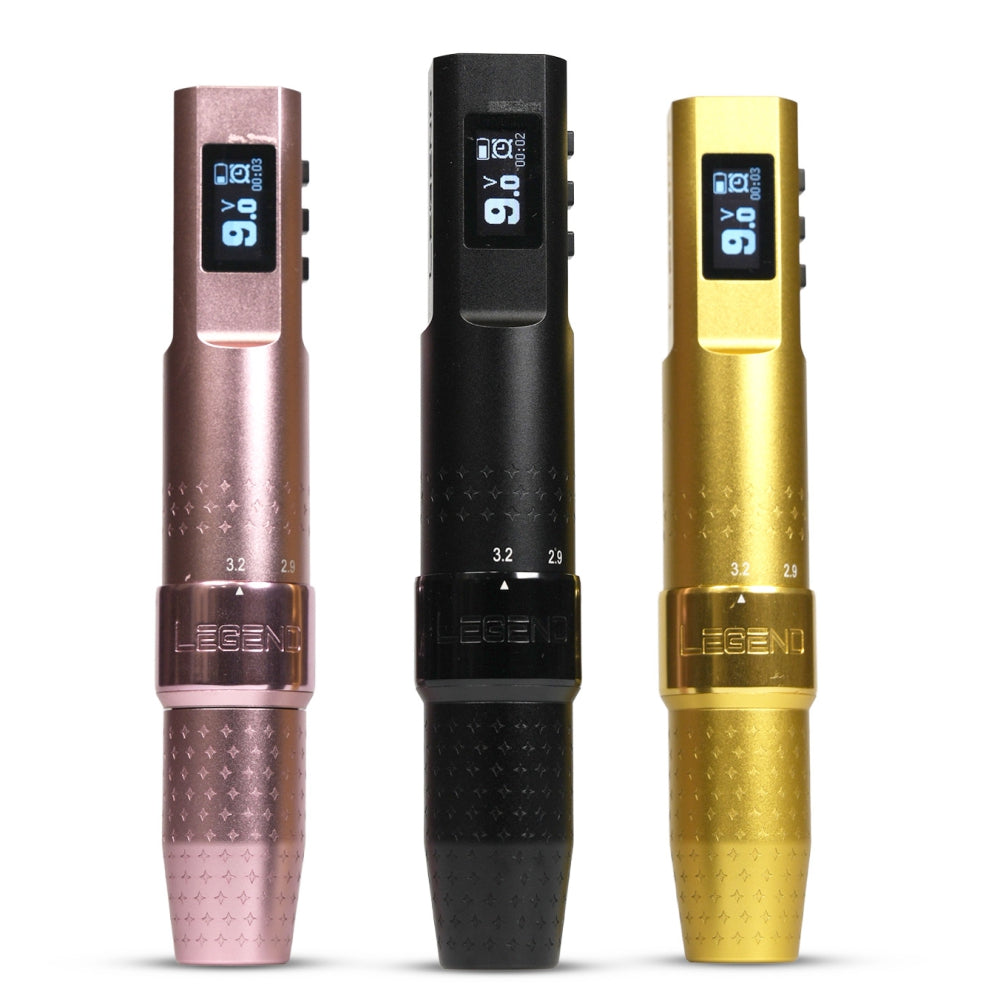
A common mistake is buying one long-stroke machine and trying to shade with it. You can, but you will fight the machine on every pass. Adjustable-stroke pens solve this directly. The Legend Air adjustable stroke pen runs six stroke options from 2.2mm to 3.2mm at just 125g, which is the band most realism artists actually live in.
Dropping your voltage to compensate for a long stroke does not turn a liner into a shader.
Choosing a Tattoo Pen for Fine-Line Realism and Portrait Work
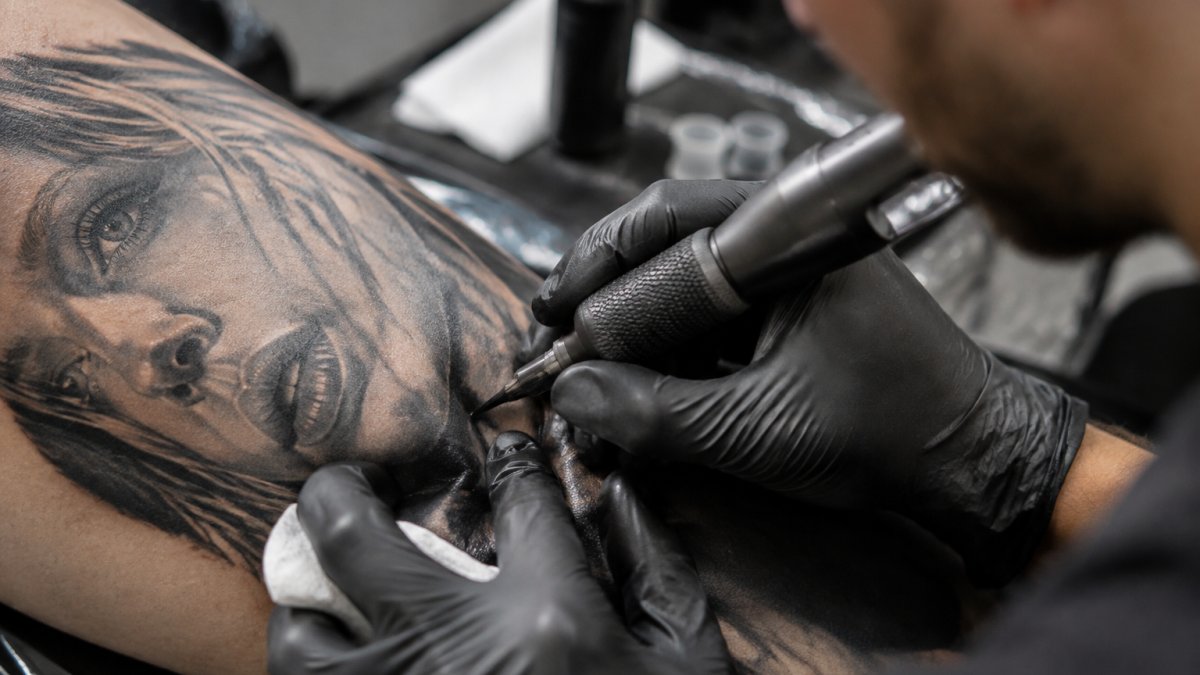
A tattoo pen for fine-line realism needs three things: a soft-hitting motor, a short stroke, and enough balance in the hand to hold a hairline for twenty minutes. Everything else is secondary.
Fine-line realism and portrait work demand that you can slow down without the machine stalling. That means torque at low voltage, not just top-end speed. A brushless motor with a direct drive system holds low-end output far better than a geared motor, which is why we steer realism artists toward that specification rather than headline RPM figures.
Ergonomics decide the last ten percent of detail quality. A bottom-heavy grip steadies your hand, and a lighter machine reduces fatigue in long sessions. If you are choosing a pen for fine-line and portrait work, the Legend Pro Shader 3.2mm machine set is built around a softer-hitting motor and a 3.2mm stroke, aimed squarely at very fine linework with 1RL to 3RL needles and pepper shading.
Needle choice and machine choice work together, so match them.
Side-by-Side: Legend Machines Compared for Realism Detail
Here is the comparison most realism buyers actually want, using the same criteria across every machine: stroke range, weight, battery life and price.
| Machine | Stroke Range | Weight | Battery | Price |
|---|---|---|---|---|
| Legend Limitless PRO | 2.3mm - 4.3mm, 6 options | Not listed | Up to 7 hours | € 295,00 |
| Legend Air | 2.2mm - 3.2mm, 6 options | 125g | 5+ hours | € 195,00 |
| Legend Limitless Wireless | 2.5mm - 4.3mm, 4 options | 216g with battery | Up to 10 hours | € 295,00 |
| Legend Pro Shader 3.2mm | Fixed 3.2mm | 170g | 5-6 hours, mini battery | € 350,00 |
| Legend Pro Wireless Shader | Fixed 3.2mm | 164g - 200g | 5-8 hours, two batteries | € 495,00 |
Price
Pricing Breakdown and What You Get for the Money
The two adjustable-stroke machines sit at € 195,00 and € 295,00, and both give you multiple stroke options in one body. That is the value argument for adjustable pens: one purchase covers lining, shading and colour packing.
The fixed-stroke Legend Pro models cost more because you are paying for a specific motor tuned to one job. The Shader is deliberately soft-hitting, with a Japanese brushless motor and direct drive. The wireless version at € 495,00 adds three grip sizes and two battery packs.
Best for: adjustable pens suit artists who work across styles or are still finding their stroke preference. Skip if: you only ever shade black-and-grey and want a single tuned machine.
Needle Grouping, Cartridge Fit and Healed Results
All Legend machines are listed as compatible with all cartridge brands. Check that the cartridge seats firmly with no lateral play before the first line.
Needle grouping affects the level of detail a session can achieve. Here is how the common groupings map to realism tasks:
| Grouping | Best Use in Realism | Why It Matters |
|---|---|---|
| 1RL - 3RL | Micro-detail, hair strokes, eyelashes, fine portrait features | Tight point concentrates ink for crisp edges; slow hand speed required |
| 3RL - 5RL | Fine linework, small lettering, portrait outlines | Slightly more pigment flow without losing control |
| 5RS - 7RS | Soft black-and-grey shading, small gradients | Round shader blends without hard edges |
| 9RS - 13RS | Larger gradient fields, cheek and forehead shading | Covers ground while keeping a soft transition |
| 7M1 - 11M1 | Pepper shading, stippled texture, colour realism blending | Magnum spreads pigment for smooth, even fields |
| 13M1+ | Large colour packing, background saturation | Efficient coverage where detail is not the priority |
For black-and-grey realism, a common pattern is to build the gradient with a slightly wider round shader or magnum, then finish the detail with a tight 1RL to 3RL.
Skin type and placement can change the approach, and aftercare affects how a tattoo heals, so set expectations with clients before the session.
Cartridge fit and grouping are also a hygiene question. Single-use cartridges must be seated and disposed of according to the studio's infection-control protocol. For studio safety and sterilisation requirements, refer to the Austrian Federal Ministry of Social Affairs, Health, Care and Consumer Protection guidance on hygiene in tattoo establishments.
Tattoo Machine Maintenance for Consistent Performance
Tattoo machine maintenance for consistent performance comes down to a short, repeatable routine backed by a service log.
Run this check before every session:
- Charge and inspect batteries; retire any pack that drains noticeably faster than usual or shows swelling
- Wipe the grip and body with approved surface disinfectant between clients
- Check the cartridge connection for play before the first line
- Confirm the stroke setting matches the technique planned for the session
- Keep the machine dry; liquid ingress voids most warranties
- Log session hours using the built-in timer to track service intervals
- Store in the supplied case, not loose in a drawer
Why each step matters for realism: battery health affects voltage stability, and a pack that sags mid-session changes the hit without warning. Cartridge play is the most common cause of sudden wobble mid-session, it takes ten seconds to check and saves a client.
Service intervals are where most artists guess. Log hours from day one so service intervals are tracked as a number rather than a feeling. Log hours from day one so the interval is a number, not a feeling.
Hygiene and maintenance overlap.
Skipping the cartridge-seat check can cause wobble mid-session, so make it part of your routine.
Pick Your Realism Machine and Add It to Cart
The decision comes down to how you work. If you move between lining, shading and colour realism, an adjustable-stroke pen gives you the most range per euro. If black-and-grey portraits are your entire book, a tuned shader will feel better in the hand from day one.
We recommend starting with the Legend Limitless Wireless full set if you want one machine that covers the widest stroke range, with 4.3mm for bold work and 2.5mm for soft shading.
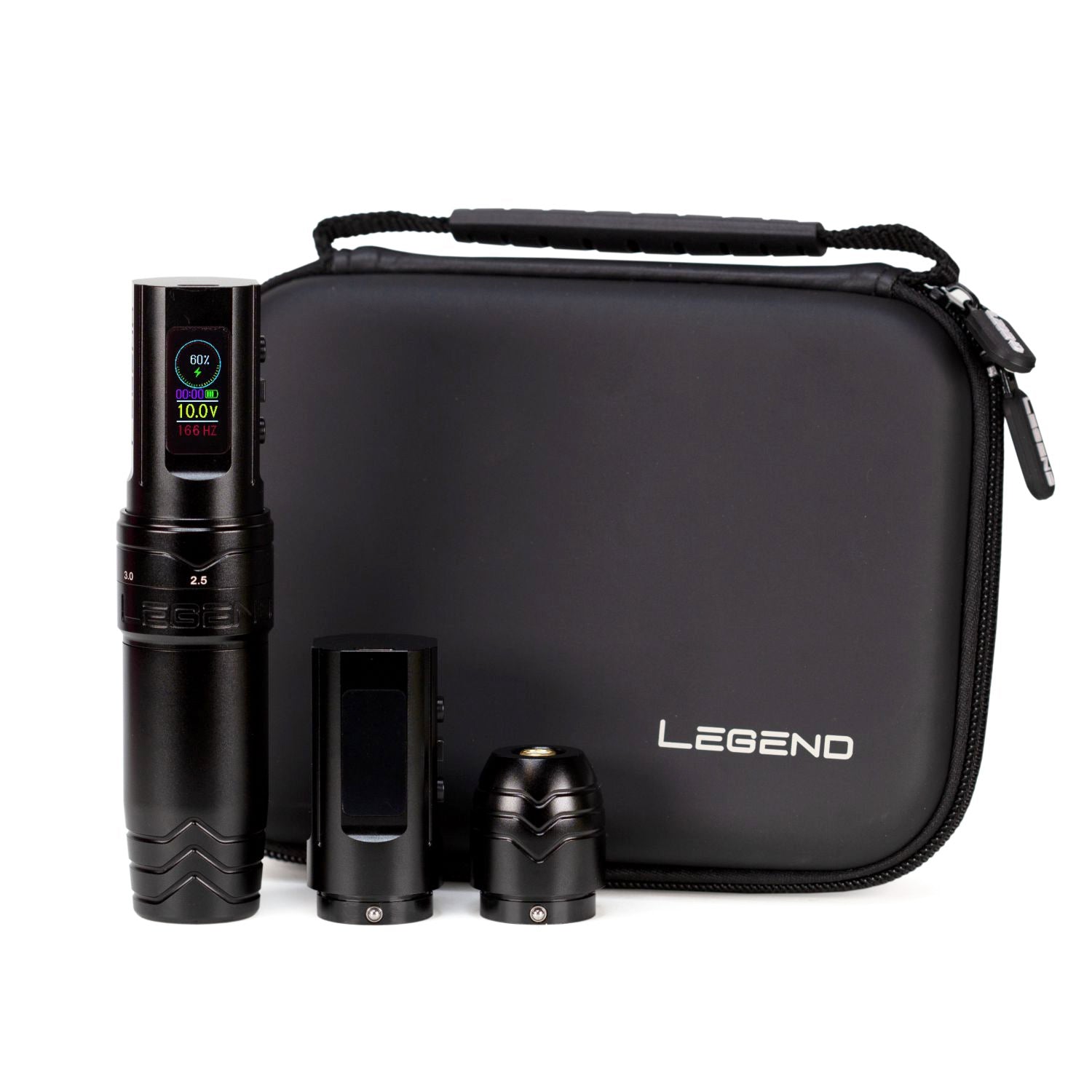
If you are comparing before you commit, the Legend Pro wireless shader gives you the fixed 3.2mm realism setup with three grip sizes and two battery packs.
Realism detail is unforgiving. A machine that drifts, wobbles or fatigues your hand will show in the healed tattoo, not just the session.
Frequently Asked Questions
What type of tattoo machine is best for black-and-grey realism?
A rotary pen with a short and adjustable stroke handles black-and-grey realism best. The Legend Air Pen, for example, offers six stroke options from 2.2mm to 3.2mm, which suits soft blending and meticulous areas. It also features a precise power output and an innovative weighted grip for control and comfort.
What stroke length is best for detailed realism tattoos?
For most detail work, a stroke between 2.2mm and 3.2mm gives the control you need. Shorter strokes hit softer, which makes layered shading and soft gradients easier to build. The Legend Limitless PRO covers 2.3mm to 4.3mm across six settings, so you can drop to 2.3mm-2.7mm for gentle black-and-grey blending and move up to 3.5mm-3.9mm when a piece needs both lining and shading in one session.
Can one tattoo machine handle both fine lines and smooth shading?
Yes, if the stroke is adjustable. A fixed-stroke machine forces you to compromise, but a pen like the Legend Limitless PRO lets you switch between six strokes from 2.3mm to 4.3mm. Set it low for soft shading and meticulous areas, then raise it to 3.5mm-3.9mm for balanced all-around work. That flexibility means one machine covers fine-line realism and gradient work without a second purchase.
Are rotary or coil machines better for realism tattoos?
Rotary machines are generally considered a good fit for realism work. Coil machines still appeal to artists who like their traditional feel and hit. The Legend Pro line uses a direct drive system and brushless motor designed to replicate the feel of a coil machine, so you get rotary consistency with a familiar response.
How do you maintain a tattoo machine for consistent detail?
Wipe the machine body and grip after every session, keep cartridges and connections free of ink residue, and charge batteries fully before long sittings. Store the pen in its case to protect the motor and display. Check your grip and stroke setting before each client, and log session time using the built-in timer. Each Legend machine ships with a Quality Certification card and serial number, which you keep for warranty claims.

